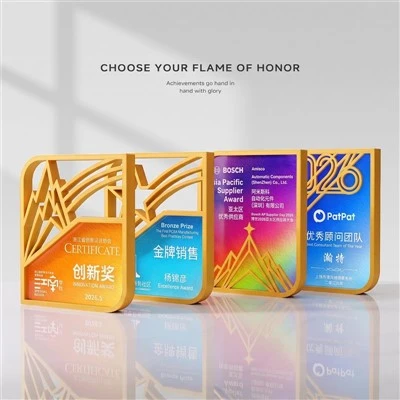
In corporate award programs, the shape of a trophy often determines how long it stays on display. The octagonal trophy has remained a consistent choice across industries for a reason that is practical rather than symbolic: the eight-sided format provides more surface area for engraving than round plaques, while the faceted edges catch light from multiple angles. This combination makes the octagonal trophy both readable and visually interesting, which explains its continued use in leadership recognition, service milestones, and sales competitions.
Origins in Function, Not Symbolism
The octagonal trophy was not designed with symbolic meaning in mind. Its use became widespread in the early 1900s when eight-sided silver cups were awarded to British military divisions, primarily because the faceted surface allowed regimental crests to be engraved on separate faces without crowding. That functional origin remains relevant today: an octagonal surface permits the display of a company logo, recipient name, year, and citation on different faces, keeping each element readable. In contrast, a round surface of similar diameter forces text to wrap or compress.
Material Effects on Appearance and Durability
Material choice directly affects how the octagonal trophy performs over time. Acrylic versions are lightweight and cost-effective, but they scratch more easily and may appear less substantial in executive settings. Glass sits between acrylic and crystal in both cost and clarity; however, the faceted edges of an octagonal cut are more likely to chip in glass than in crystal. K9 crystal is the preferred material for premium applications because the octagonal shape amplifies internal refraction-each face acts as a separate window, creating brightness at different viewing angles. The tradeoff is higher cost and greater fragility, requiring thicker edges or careful handling.
Practical Considerations for Procurement
Buyers sourcing an octagonal trophy for corporate programs typically evaluate height, base width, and engraving method. Heights from 120mm to 200mm are standard; taller pieces require wider bases to prevent tipping. Engraving methods vary in durability: sandblasted text forms a permanent frosted surface, while color fill offers contrast but may fade under bright office lighting over several years. On crystal, color fill can also absorb moisture and darken, whereas acrylic holds fill more reliably. These factors affect long-term display quality and replacement frequency.
Packaging and Transit Considerations
Most suppliers package individual octagonal trophies in protective foam inserts within gift boxes. For volume orders, this packaging is often included in the quoted price. The edges of an octagonal trophy are its most vulnerable points during shipping; packaging designed with cutouts for the eight corners reduces the risk of transit damage. Some manufacturers offer custom packaging for large orders, though this adds to lead time. Standard lead times for acrylic orders typically range from 10 to 15 working days, while crystal and glass may require additional time for polishing and inspection. For international orders, the packaging weight and dimensions will affect freight costs-an octagonal box is slightly larger than a round one of comparable height due to the corner clearance required.