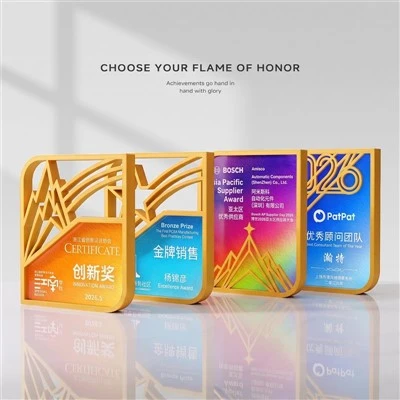
You walk into an awards ceremony and you can see how people gravitate toward some trophies. They pick them up, rotate them, and discuss the weight or how the light falls on an edge. That reaction doesn't just take place. It comes from a 3D trophy design that considers not only how the piece looks on a shelf, but how it feels in someone's hands and what it says about the moment it represents. For procurement teams ordering in bulk getting that right is more than just picking out a pretty shape from a catalog.
Why Depth is More Important Than You Realize
Someone was recognized with a flat plaque. A well executed 3D trophy design is a message to them that their work had substance, dimension and permanence. You can see the difference in how the recipients display these items. We've seen plaques hidden away in drawers or hung in back offices but a trophy with real depth and presence ends up on front desks or conference room shelves. Visibility that matters for your brand, too. Every time someone walks by that trophy, they see your logo and your commitment to quality.
Layering is often the most effective approach. Clear acrylic panels are stacked with printed interlayers to create a sense of depth that catches light from many angles. Some clients request tinted layers in their brand colors so the trophy feels like an extension of their identity. Some people like crystal for the way it reflects light . Especially stage lighting at the actual event . It's not so much about what's cool as it is about the vibe of your event and the work spaces of your recipients.
Tradeoffs You Really Will Face in the Real World
In conversations with corporate buyers about 3D trophy design, three practical tensions tend to emerge:
First, complexity and quantity. A complete custom shape with internal 3D laser etching might be around $40-60 each at 100 pcs, while the same shape in injection-molded acrylic might be $8-12 each at 1000 pcs. The complexity of the design is a variable that affects the breakeven point. We've had clients order 200 crystal pieces for executive levels and 1,500 acrylic pieces for broader recognition programs, using the same basic pillar shape but in different materials and finishes.
Second, lead time vs customization depth. Simple acrylic trophies with surface printing can be shipped in 7 days. Internal layered artwork adds that to 10-12 days. Full 3D printed prototypes with complex inner structures take 15-20 days, especially if you order color samples first. One of our regular clients allows an extra week for samples on every new design and they've told us that single step has saved them from costly revisions more times than we can count.
Third, perceived value vs real world material cost. K9 crystal is obviously heavier than acrylic and that weight gives it a premium feel. But if you're hosting an event for 500 people with a limited budget, acrylic with a weighted base is going to get you 80% of the visual impact for 30% of the cost. Trick is matching the material to the occasion. We've seen acrylic work great for annual sales team awards and crystal that's strictly reserved for decade long service milestones.
The first things experienced buyers look at
We have observed over the years that procurement managers who regularly order 3D trophy design do not look at the sample piece. They ask about packaging because damaged trophies cause last minute headaches before events. They ask for color proofing because the brand red looks different printed on acrylic than on crystal. They also confirm the engraving depth, as shallow text can become unreadable under some lighting, while engraving too deeply can weaken thinner sections.
One purchasing director gave a practical tip: "Always order 5% more pieces for events with 200 or more recipients." Last minute typos, name changes, shipping mishaps, are less common than you'd think, but having backups saves you from awkward moments at the podium. Another buyer said she changes designs every two years to keep the recognition program fresh. She changes the internal artwork or adds a new color layer to make the pillar shape distinctive for different program years, but keeps the same pillar shape.
Working With Your Vendor
Being clear about your event timeline, budget range, and recipient expectations makes the whole process easier. We usually ask for examples of past trophies or pictures of your office space to help us design something that fits in with your existing brand materials. We generally get sample approval in 7-10 days and will adjust colors or engraving details based on your feedback before we enter full production.
The best 3D trophy design results come from conversations, not order forms. Tell us how the award will be presented and who will get it, and we can suggest specific features such as a wider base for stability, or matte finish sections that reduce glare in the photos. Those details are often what separate a trophy that ends up gathering dust from one that remains visible for years to come. Share your event with us and we'll discuss samples of material and design options that suit your program.