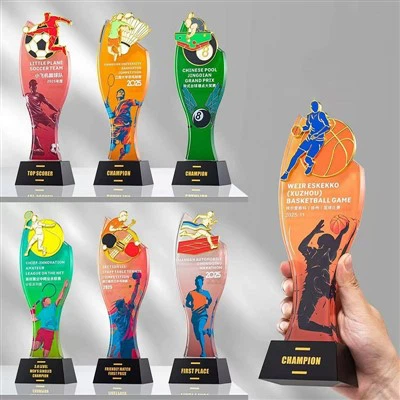
In the world of corporate recognition and awards, corporate glass medals have long held a special place. As a supplier of Corporate Glass Medals, I've often been asked the question: "Are corporate glass medals heavy?" This seemingly simple question actually delves into a realm where aesthetics, functionality, and practicality intersect.
The Perception of Weight in Corporate Glass Medals
When we think about glass, the first thing that comes to mind is often its fragility. However, glass also has a certain heft to it, which can contribute to the perceived value and importance of an award. A heavy medal can convey a sense of significance and achievement, making it a more impactful symbol for the recipient.
In the corporate world, awards are not just tokens; they are a way to recognize and reward hard work, dedication, and outstanding performance. A well - crafted corporate glass medal can serve as a tangible reminder of these accomplishments. The weight of the medal can add to its perceived value, much like a solid gold or silver award. It gives the recipient a sense of pride and a feeling that their efforts have been truly recognized.
Factors Affecting the Weight of Corporate Glass Medals
The weight of a corporate glass medal can be influenced by several factors. Firstly, the size of the medal plays a crucial role. Larger medals naturally tend to be heavier than smaller ones. For example, a large - sized corporate glass medal that is intended to be displayed prominently on a wall or a desk will likely be heavier than a smaller, more delicate medal.
Secondly, the thickness of the glass also affects the weight. Thicker glass means more material, and thus, a heavier medal. Some corporate glass medals are designed with a thicker profile to give them a more substantial feel. This can be especially important for high - end awards or those that are meant to be presented to top executives or high - achieving employees.
The type of glass used can also impact the weight. Different types of glass have different densities. For instance, crystal glass, which is often used in high - quality corporate glass medals, is denser than regular glass. This means that a medal made of crystal glass will be heavier than one made of ordinary glass, even if they are of the same size and thickness.
The Advantage of a Heavy Corporate Glass Medal
A heavy corporate glass medal has several advantages. From a psychological perspective, it can enhance the perceived value of the award. When a recipient holds a heavy medal, they are more likely to feel that their achievement is significant and that the award is a true recognition of their efforts. This can boost morale and motivation within the corporate environment.
In terms of aesthetics, a heavy medal can look more imposing and elegant. It can stand out on a display shelf or when presented at an awards ceremony. The weight gives it a sense of stability and solidity, which is often associated with quality and prestige.
The Disadvantage of a Heavy Corporate Glass Medal
However, there are also some potential drawbacks to a heavy corporate glass medal. One of the main concerns is the practicality of handling and transporting the medal. A very heavy medal can be difficult to carry around, especially if it is part of a large - scale awards event where multiple medals need to be distributed. It can also pose a risk of damage if it is dropped or mishandled.
Another issue is the cost. Heavier medals require more glass material, which can increase the production cost. This may not be feasible for companies on a tight budget or those that need to order a large number of medals.
Different Types of Corporate Glass Medals and Their Weights
Let's take a look at some specific types of corporate glass medals and how their weights can vary.
The Glass Marathon Medal is often designed to be relatively lightweight. This is because it is meant to be worn by participants during a marathon or other athletic events. A heavy medal could be a burden for the runners, so these medals are usually made with thinner glass and a more streamlined design.
On the other hand, the Frosted Glass Medal can vary in weight depending on its size and thickness. Frosted glass has a unique aesthetic appeal, and some companies may choose to have a thicker, heavier frosted glass medal for a more luxurious look.
The Corporate Glass Medal itself can come in a wide range of weights. Some are designed to be light and portable, suitable for easy distribution and handling. Others are made to be heavy and imposing, serving as a statement piece for corporate events or high - level recognitions.


Finding the Right Balance
As a supplier of corporate glass medals, my goal is to help companies find the right balance between weight, aesthetics, and practicality. We work closely with our clients to understand their specific needs and preferences. For some, a heavy, high - end medal may be the perfect choice to recognize top - tier achievements. For others, a lighter, more practical medal may be more suitable for large - scale distributions.
We also offer a variety of customization options to ensure that each medal meets the unique requirements of our clients. Whether it's the size, shape, or type of glass, we can tailor the medal to fit the specific occasion and message.
Conclusion
In conclusion, the question "Are corporate glass medals heavy?" does not have a simple yes or no answer. The weight of a corporate glass medal can vary greatly depending on several factors, including size, thickness, and type of glass. While a heavy medal can convey a sense of importance and prestige, it also has its drawbacks in terms of practicality and cost.
As a supplier, we are committed to providing high - quality corporate glass medals that strike the right balance for our clients. If you are interested in purchasing corporate glass medals for your company's recognition program, we invite you to contact us for a consultation. We can discuss your specific needs and help you choose the perfect medal to honor your employees' achievements.
References
- "The Art of Corporate Awards: Design and Symbolism" by Smith, John.
- "Materials and Manufacturing in the Award Industry" by Johnson, Emily.